
For developers
Just Laravel. No Magento templating.
Blade, Tailwind CSS and a few renderless Vue components. Build Magento storefronts the way you already build everything else — without layout XML or a static content deploy in sight.
The stack
Laravel + Blade
The storefront is a regular Laravel application with Blade templates. No layout XML, no phtml.
Tailwind CSS 4 + Vite
Utility-first styling with Tailwind CSS 4, built with Vite — just like any other modern Laravel project.
Vue 3, renderless
Vue handles state for things like the cart and checkout, but the components are renderless: all markup stays in Blade, so you rarely touch Vue at all.
InstantSearch
Listings, filters, search and autocomplete query your Elasticsearch or OpenSearch index through InstantSearch, kept up to date with Laravel Scout.
Eloquent + GraphQL
Product and category pages read straight from the Magento database with Eloquent. The cart, checkout and customer accounts use Magento's GraphQL API.
Turbo navigation
Turbo Drive makes moving between pages feel instant, and Turbo Frames lazy-load parts of a page.
No more layout XML and phtml
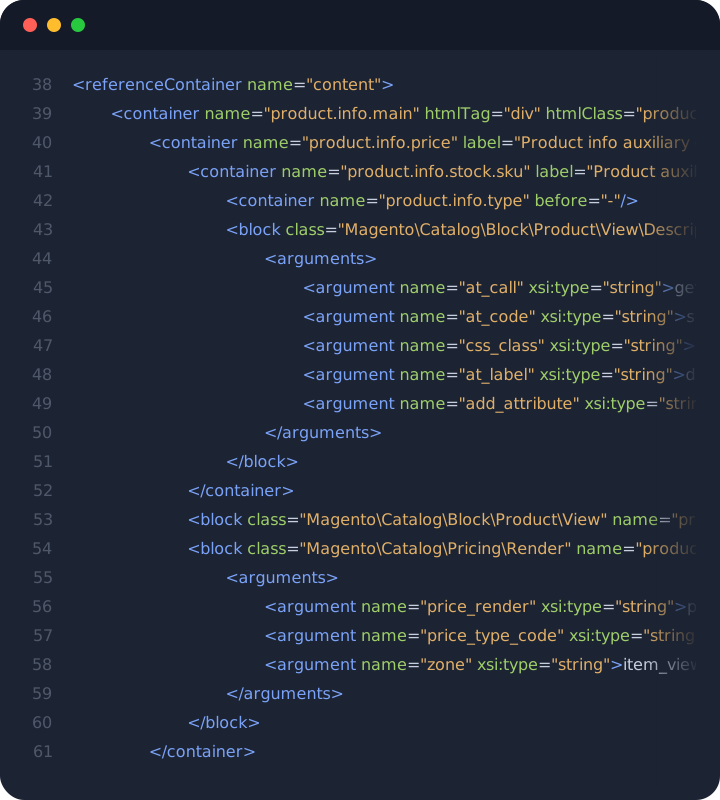
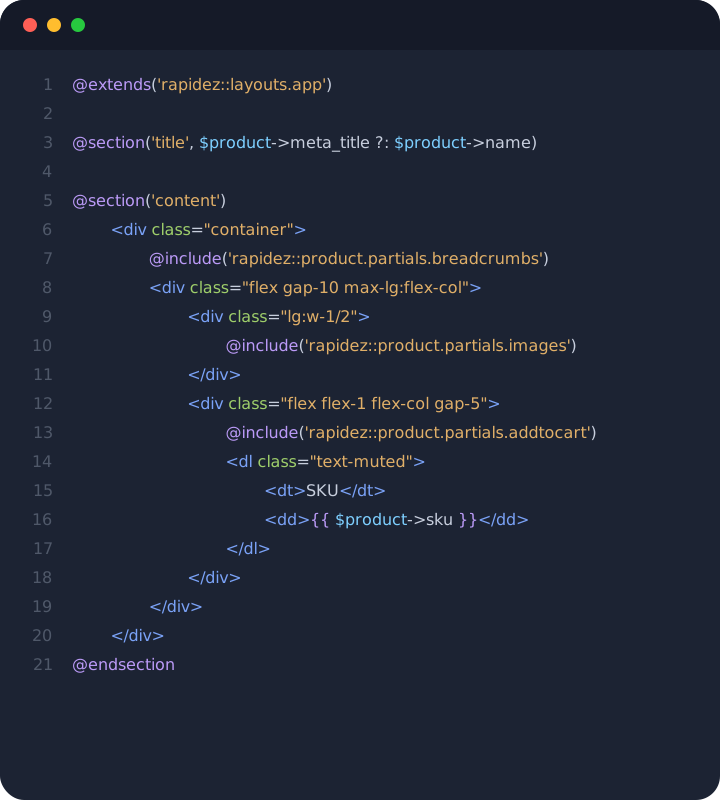
Magento's own product page layout is over 200 lines of XML, pointing to 27 phtml templates. In Rapidez, the product page is a Blade view with Tailwind classes. Override it, or add an include, component or stack right where you need it — with output escaped by default.
Built for a real dev workflow
Up and running in minutes
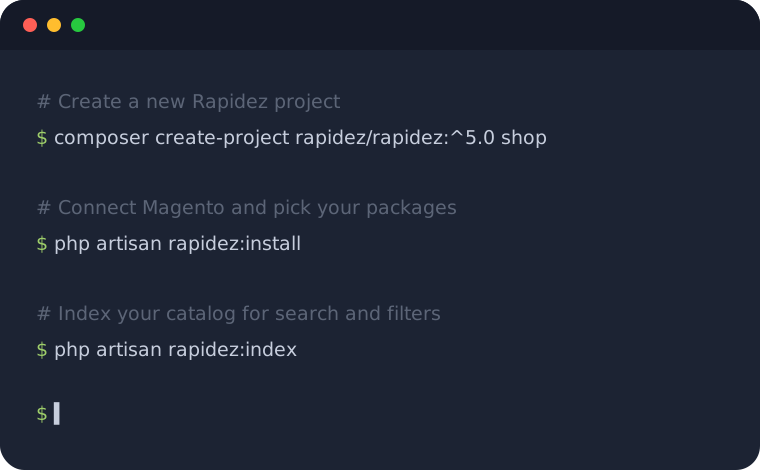
Create a project with Composer and run the interactive installer. It checks your Magento connection, lets you pick packages and can even start a demo Magento in Docker.
A fast feedback loop
Edit a Blade template and refresh, with Vite rebuilding your CSS and JavaScript as you go. No static content deploy, and fast even uncached.
Testing included
One command publishes the PHPUnit and Playwright test suites into your project, including accessibility and Lighthouse checks. PHPStan and Laravel Pint keep the code clean.
Extend without forking
Override any view, swap models and controllers through config, and hook in with Eventy filters. A Composer plugin flags overridden views that changed upstream.
The whole Laravel ecosystem
Livewire, Horizon, Nightwatch, Forge or Laravel Cloud: if it works with Laravel, it works with Rapidez.
Ready for AI-assisted coding
The docs are available as llms.txt, and Rapidez ships guidelines that Laravel Boost picks up automatically, so your AI agent knows the conventions too.
See it in production

Irridelta

Veldman Slijptechniek

Barrel Brothers

Fietsenwinkel

PackagingDirect

Drank.nl

Right Spirits

Huisdierenbazaar

Ranzijn Tuin & Dier

Dorstlust

Ancotech

Rozenkelim

BikeFamily
Built in the open
Plays nicely with





Frequently asked questions
Do I need to know Vue?
No. The Vue components are renderless, so all markup lives in your Blade files. Most of the time you never touch the Vue layer.
I've never worked with Laravel. Where do I start?
If you know PHP, you'll feel at home quickly. Laracasts is the best place to learn Laravel, Tailwind and Vue, and the Rapidez docs cover everything specific to Rapidez.
Can I use Livewire?
Yes. Rapidez is a regular Laravel app, so you can use Livewire directly — no need for a port like Magewire.
How do major version upgrades work?
Each major release documents its breaking changes in an upgrade guide, including a ready-made prompt if you want an AI agent to do the heavy lifting. Version 5, for example, removed the dependency on Magento flat tables and moved to Vue 3 and Tailwind CSS 4.
Where can I host it?
Anywhere you'd host Laravel: Forge, Laravel Cloud or a small server of your own. Magento no longer renders your storefront, so it needs far less capacity.
Is Rapidez really free and open source?
Yes. The framework and its packages are free and open source under the GNU GPLv3, and developed in the open on GitHub.